The Phonetics Laboratory
Funding: European Social Fund. NSRF, Operational Program “Education and
Lifelong learning” Co –financed by the European Union and the Greek State
PI: Katerina Nicolaidis
Period: 31 January 2014 -
31 July 2015
Budget: 178.000€
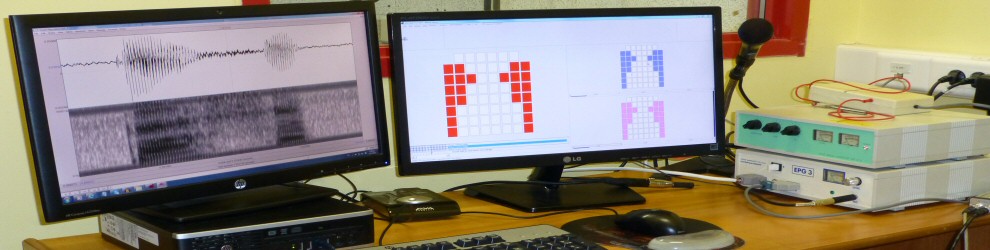
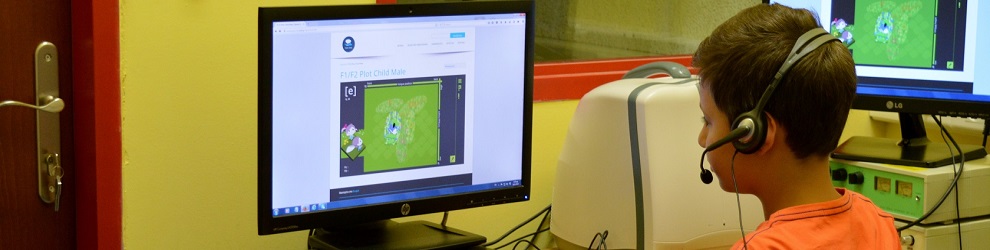
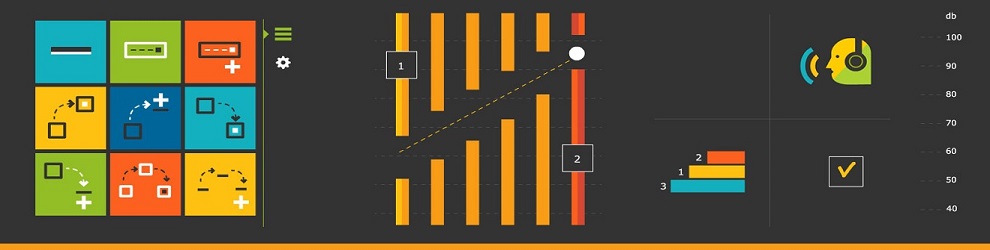
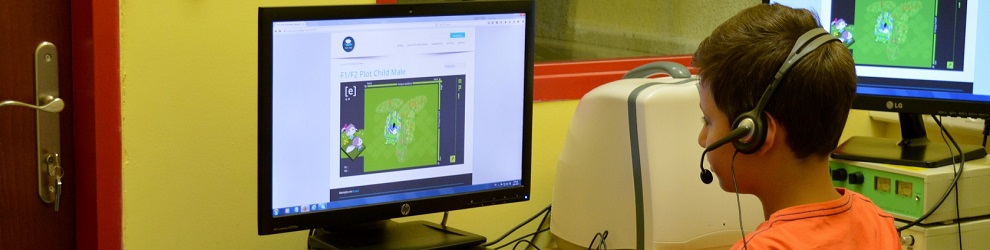
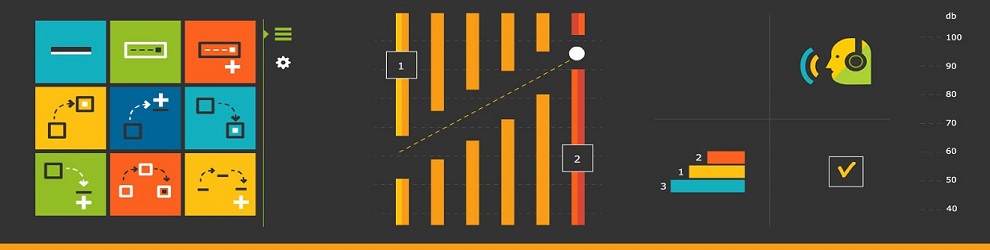
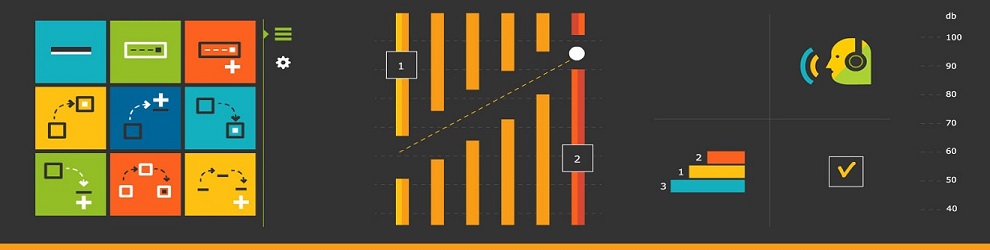
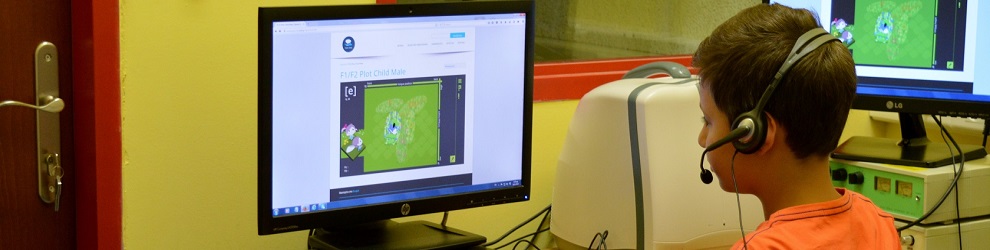
The aim of the project is the development of an online biofeedback speech training tool for applications in education and in clinical intervention. The tool provides training in the perception and production of key segmental and suprasegmental aspects of Greek. It is addressed to teachers and learners of Greek as a foreign or second language (L2) as well as to speech and language therapists working with clinical populations that have articulation and phonation problems (e.g., speakers with hearing impairment, dysarthria, etc). The development of the training tool is based on a robust and comprehensive multidisciplinary framework which draws from theoretical and empirical research in phonetics/phonology, current methodological approaches for pronunciation training and speech intervention as well as current advances in speech technology applications including automatic speech recognition. More information about the project can be found at: http://speakgreek.web.auth.gr/wp/
Funding: Aristotle University Research Committee Research Grant
PI: Katerina Nicolaidis
Period: July 2014-June 2015
Budget: 4000€
The aim of this project is to collect empirical data and evaluate a new method for the combined teaching of pronunciation and vocabulary (PRO-VOC) to learners of English as a foreign language (EFL). While there is commonly strong emphasis on the teaching of vocabulary, pronunciation teaching is frequently neglected in the EFL classroom. PRO-VOC method aims to address such imbalance which may affect learners’ general fluency skills, degree of intelligibility and communicative competence. Teaching will take place in the Greek EFL classroom at different grades of elementary school.
Collaborator: Katerina Nicolaidis
The main aim of the project is to examine the linguistic and cognitive abilities of bilinguals. Simultaneous bilinguals are investigated along with early or late successive bilinguals in a variety of educational frames leading to different dominance patterns. Our lab focuses on the phonetic and phonological aspects of bilingualism. The language groups under investigation are Greek-English, Greek-German and Greek-Albanian. More specifically, we investigate VOT and closure duration of stops in word initial position in Greek-English and Greek-German bilingual speech, as well as cluster production in word initial production for all the language pairs under invetigation. More information about the project can be found at: http://www.diglossia.gr/.
Collaborator: Katerina Nicolaidis
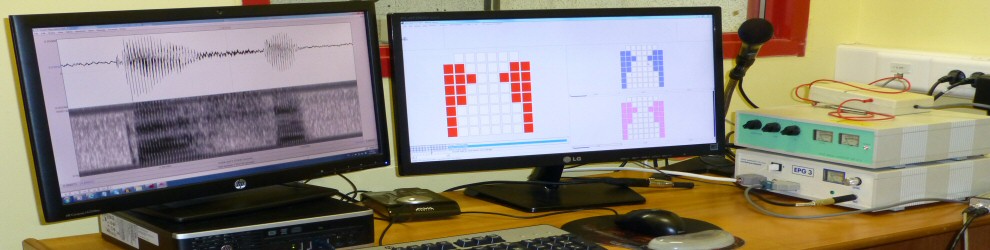
The aim of this project is to describe the vowel system of various Modern Greek dialects. To this end, phonetic experimental techniques will be used for the acoustic, articulatory (electropalatographic ) and perceptual analysis of vowels. The description of the vowel system will be both at a phonetic and phonological level. A glotto-geographic index will be created to be used as a basis for future dialectal research. This linguistic awareness of nonstandard Greek dialects will be presented both to academic and non-academic audiences so as to help create educational material which will promote the significance and richness of Greek dialects. The dialectal areas under investigation are: Epirus, Macedonia, Crete, Peloponnese, Thessaly and Athens (for SMG). Our lab is responsible for the articulatory (electropalatographic) analysis of the vowels. In addition, for a better understanding of tongue movement, Ultrasound Tongue Imaging (UTI) recordings will be held in our lab for all five dialects (plus Modern Greek). More information about the project can be found at: http://www.vocalect.eu/.
Collaborator: Katerina Nicolaidis
“Routes in Teaching Modern Greek” is a distance learning programme which includes three sub-programmes “Teaching Modern Greek as a foreign language”, “Teaching Modern Greek to foreign language speakers in Greece”, “Teaching Modern Greek to teachers posted abroad and students of Modern Greek studies”. The lab has contributed in the course “teaching grammar, vocabulary and pronunciation” and has provided teaching materials in the teaching of pronunciation. More information at http://elearning.greek-language.gr, http://www.greeklanguage.gr/node/33.
This project, undertaken by Dr. Anna Sfakianaki, has received an Honorable Mention for the Excellence Postdoctoral Scholarship (2013-14) by the Research Committee of the Aristotle University of Thessaloniki. It builds on her doctoral research on coarticulation in hearing-impaired speech and is supervised by Dr. Katerina Nicolaidis. The main aims are: (1) a systematic investigation of the relationship between coarticulation and intelligibility in hearing-impaired speech, and (2) an examination of the segmental duration of hearing-impaired productions in relation to normal-hearing productions, and its correlation with coarticulation degree and intelligibility level.
Affiliated investigator: Katerina Nicolaidis
The paidologos project was a large cross-linguistic investigation of phonological development that was supported by NIDCD funding between 2003 and 2010. The project aimed to compare the speech of 2-6 year old children with typical phonological development across four languages that have different phonotactics. The languages were Hong Kong Cantonese, American English, Greek and Japanese. Some of the parameters investigated include the role of lingual obstruent phoneme frequency and vowel context in the acquisition of these consonants in the above languages. More information can be found at http://www.ling.ohio-state.edu/~edwards/ and http://learningtotalk.org/node/5?q=node/24.
Main Investigator: Katerina Nicolaidis
Period: 1998-2000
Aristole University Research Committee Grant
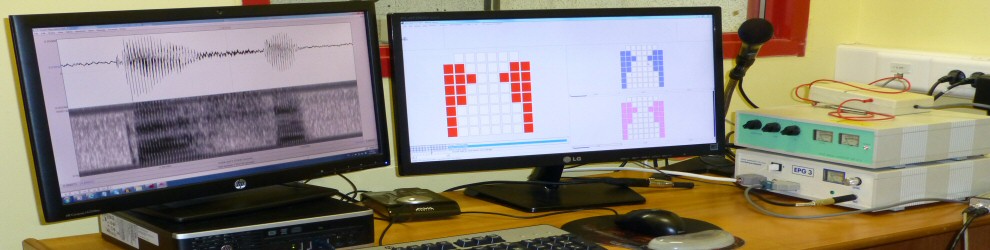
The project used electropalatography (EPG) to study the linguo-palatal contact patterns of several consonants produced by four Greek speakers with profound HI and different degrees of intelligibility. EPG was also used as a bio-feedback technique for the teaching of articulatory targets.
PI: Katerina Nicolaidis co-directed with Marina Mattheoudakis
Self-funded Project – Aristotle University Research Committee
From 2003 and for several years, the department of Theoretical and Applied Linguistics offered Teacher training seminars to in-service teachers of English as a foreign language. Different programs were offered (two-week, one-week, weekends) covering many areas including teaching vocabulary, teaching the skills, teaching pronunciation, learner autonomy, classroom management, teaching young learners, microteaching etc.