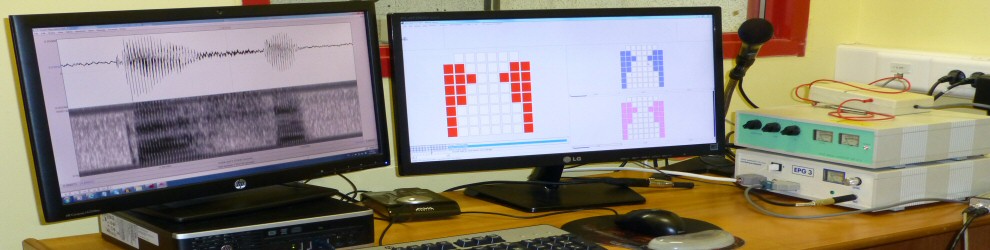
The Phonetics Laboratory
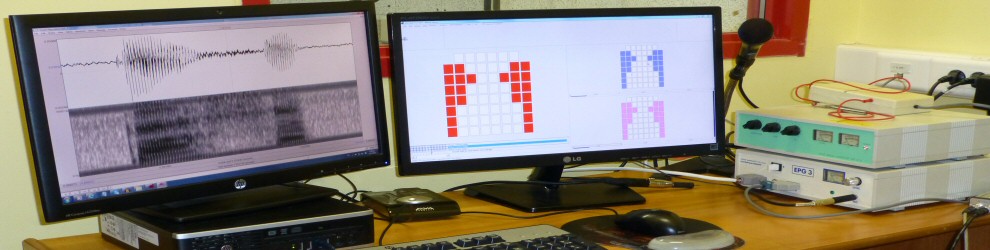
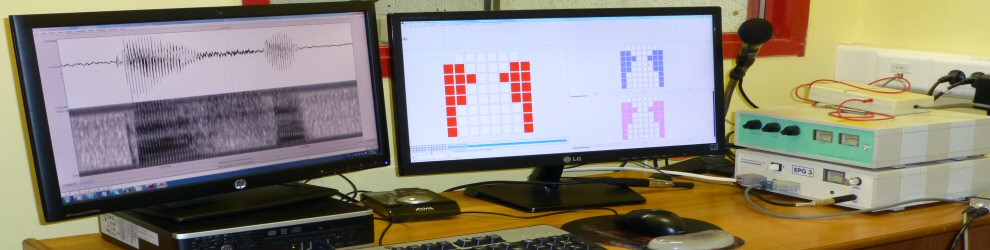
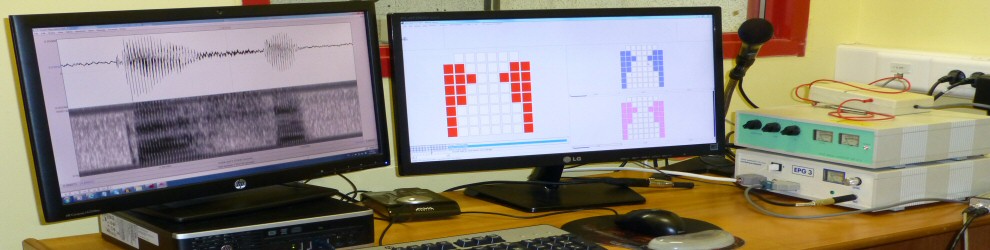
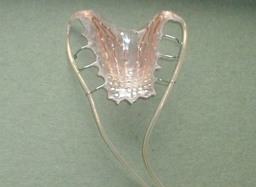
The British EPG system marketed by Articulate instruments is used in current research at the Phonetics Laboratory. The major components of the system are the EPG unit, the interface unit, the multiplexer and the artificial palate. The artificial palate is a custom-made acrylic plate with 62 sensors embedded on the surface to detect lingual contact lingual contact with the palate in continuous speech. The making of the artificial palate involves taking a plaster impression of the upper teeth and palate for each subject, marking the position of the sensors on the impression and then constructing the acrylic plate and placing the sensors. The electrodes are distributed in eight rows, which correspond to particular articulatory regions as shown below.
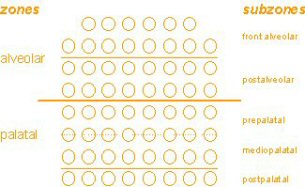
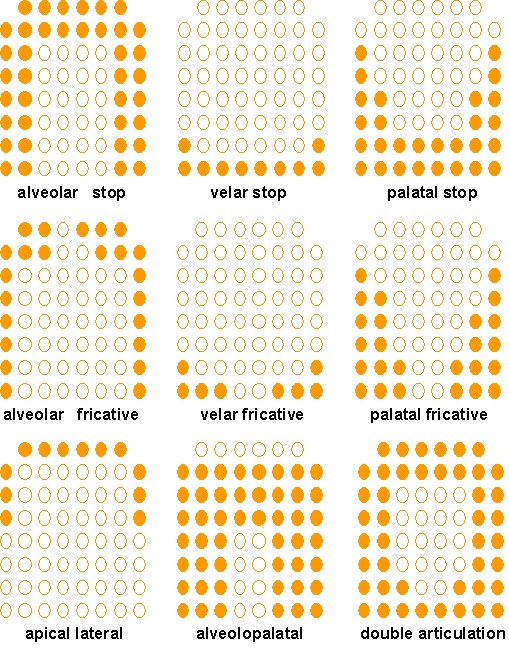
The Figure below shows some typical EPG contact patterns found during consonant production in normal speech. In each palatal diagram tongue-palate contact is indicated by the filled circles; empty circles indicate absence of lingual contact with the palate. Electrodes at the top of each palatogram correspond to anterior regions of the roof of the mouth (e.g. alveolar); those at the bottom correspond to posterior regions (e.g. velar), (see articulatory regions in the figure above).